Executive Summary
A well-installed epoxy floor is one of the best investments a facility can make. It is seamless, chemical-resistant, and built for heavy traffic. But even the toughest coating needs a consistent care routine. Good industrial epoxy floor maintenance protects your investment, keeps your workplace safer, and helps you avoid costly early replacements. At Stalwart Surface […]
A well-installed epoxy floor is one of the best investments a facility can make. It is seamless, chemical-resistant, and built for heavy traffic. But even the toughest coating needs a consistent care routine.
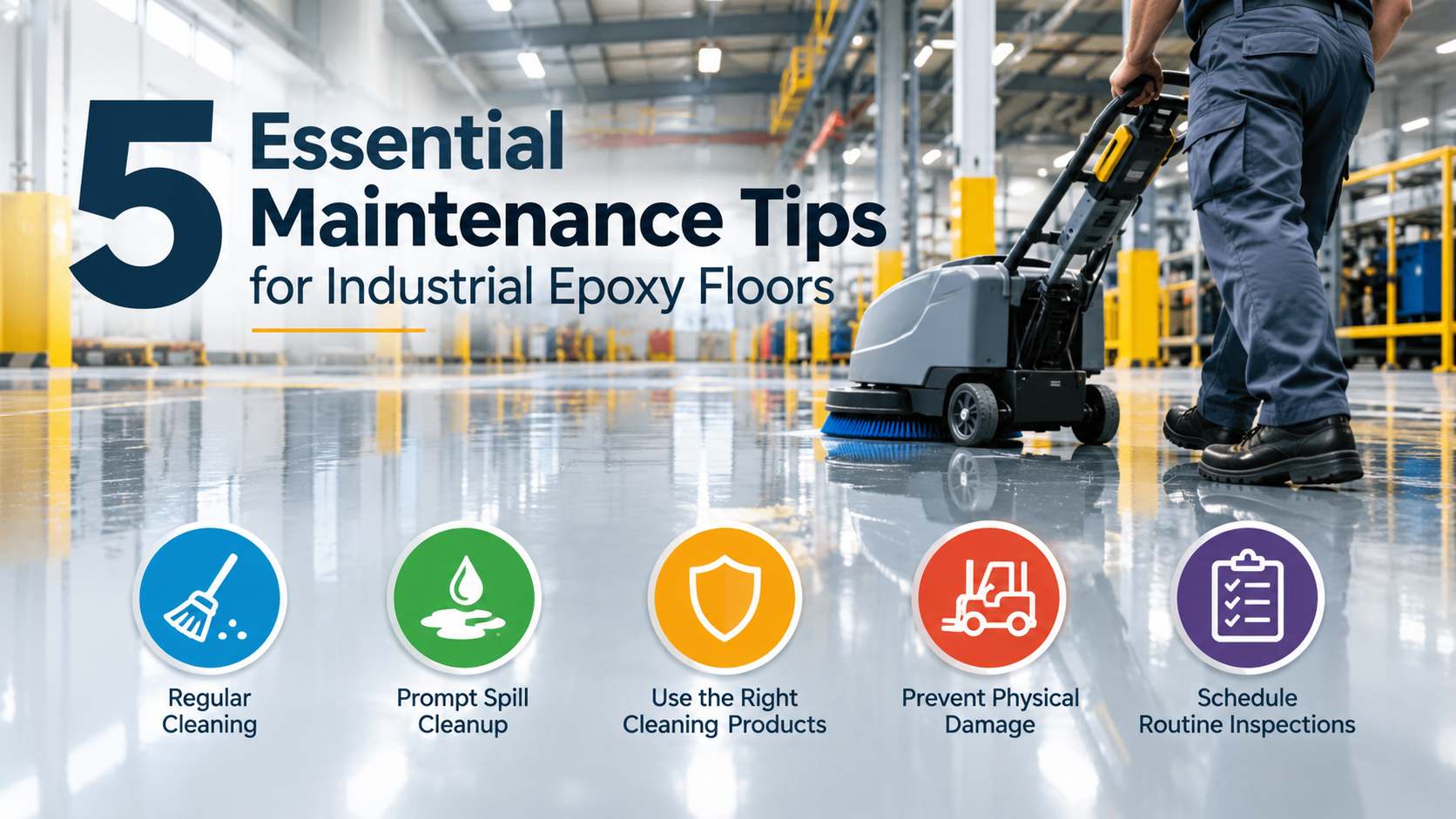
Good industrial epoxy floor maintenance protects your investment, keeps your workplace safer, and helps you avoid costly early replacements. At Stalwart Surface Systems, we've seen well-maintained floors outlast neglected ones by years. Here are five tips to keep your floors performing at their best.
1. Sweep and Dust-Mop Daily
Grit, dust, and metal shavings may look harmless, but under foot and forklift traffic they act like sandpaper. They slowly dull the finish and wear down the topcoat.
- Sweep or dust-mop high-traffic areas daily, and more often in production zones.
- Use soft-bristle brooms, microfiber mops, or an industrial vacuum.
- Place walk-off mats at entrances to trap dirt before it reaches the floor.
This simple habit is the cheapest way to extend the life of your epoxy flooring.
2. Use the Right Cleaning Products and Tools
Deep cleaning keeps your floor hygienic and slip-resistant, but the wrong products can do more harm than good.
- Choose a pH-neutral cleaner. Harsh acidic or strongly alkaline chemicals can dull or damage the coating over time.
- Avoid abrasive tools. Stiff wire brushes and aggressive pads can scratch the surface. Use soft or medium-duty brushes and pads instead.
- Use an auto-scrubber for large areas. It cleans efficiently and consistently across warehouses and plants.
- Rinse or squeegee thoroughly. Leftover cleaner leaves a film that can make the floor slippery and attract more dirt.
- Skip the wax and polish unless your flooring provider confirms they're compatible with your system.
Always check your flooring manufacturer's recommendations before introducing a new cleaning product.
3. Clean Up Spills and Stains Promptly
Epoxy resists many chemicals, but resistance isn't immunity. Some substances can stain or etch the coating if left for long periods, including:
- Strong acids and solvents
- Hydraulic and brake fluids
- Oils and grease
- Certain tire residues, since hot tires can leave marks or discolor some coatings
Wipe up spills as soon as they happen, using absorbent materials and an appropriate cleaner. Where spills are likely, such as loading docks, maintenance bays, and chemical storage areas, add drip trays, containment mats, or secondary containment. This keeps your floor looking good and reduces slip hazards.
4. Protect the Floor from Impact and Abrasion
Industrial floors take a beating, but you can limit avoidable damage.
- Use protective pads or plates under heavy machinery, racking legs, and equipment feet.
- Avoid dragging pallets, steel drums, or equipment across the surface. Lift or use proper wheeled carriers.
- Check forklift and cart wheel condition. Worn or damaged hard wheels concentrate stress and scar the coating.
- Use mats or protective barriers in areas where heavy objects are often dropped or moved.
Even a heavy-duty epoxy system can chip or gouge under repeated concentrated impact.
5. Inspect Regularly and Repair Early
Small problems become expensive ones when ignored. Schedule routine inspections, monthly for high-traffic facilities, and look for:
- Chips, cracks, or gouges
- Worn or dull patches that suggest the topcoat is thinning
- Peeling, bubbling, or delamination
- Damaged or open joints and edges
- Reduced slip resistance in wet or high-traffic zones
Repairing minor damage promptly stops moisture, chemicals, and debris from getting under the coating, which prevents larger failures. Depending on traffic, chemical exposure, and system type, a maintenance recoat or topcoat refresh may restore protection and appearance without a full floor replacement. A professional assessment will tell you the right timing for your facility.
Frequently Asked Questions
How often should industrial epoxy floors be cleaned?
Sweep daily, and deep clean on a schedule based on traffic and contamination, from weekly to monthly. High-risk areas like food processing, pharma, and workshops may need more frequent cleaning.
Can I use vinegar or bleach on epoxy floors?
It's best to avoid them. Acidic and harsh chemical cleaners can dull the finish over time. Stick to pH-neutral products approved for your system.
How long do industrial epoxy floors last?
Lifespan depends on the system, installation quality, preparation, traffic, and maintenance. With proper care, many epoxy floors perform well for years, and consistent maintenance is one of the biggest factors in how long.
Is it better to repair or replace a damaged epoxy floor?
Localized damage can often be repaired. Widespread delamination or substrate problems may need a more extensive solution. A professional inspection can tell you which applies.
Keep Your Floors Performing with Stalwart Surface Systems
Consistent care protects your floor, your team, and your bottom line. If your floors show signs of wear, or you're planning a new installation or recoat, our team is here to help.
Contact Stalwart Surface Systems today for a free consultation and floor assessment.
📞 +91 97008 77732 | 📧 stalwartsurfacesystems@gmail.com | 🌐 https://stalwartsurfacesystems.com/
Serving Hyderabad
Related Flooring Services
Explore primary industrial flooring systems discussed in this technical guide: